Saturday, 26 November 2016

🥔 🍚 🌾 🥚 🥓 Nothing fancy...

Hello dear friends,

Hope you're all doing well

I just thought I'd post my journal entry that I wrote after pulling another all–nighter of hard mental work in order to finish it today. 😵 Also, I felt encouraged with Chef Claire's positive comment on my work—thanks heaps for the encouragement Chef Claire! 😄 Part of our course is to write something about the dishes we cook during practical assessments. In our school, we use this digital learning platform called Blackboard to answer worksheets, post journal entries, and other theoretical learning activities.

Nothing fancy for today; just basic but delicious dishes that I cooked during the final practical assessment of our Vegetable, Fruit, Egg, and Farinaceous Dishes Unit last Tuesday (22 November). 😊 In case you'd like to try out the recipes, I'll try to edit this post next time when I get more time on my hands.

— ♦ — ♦ — ♦ — ♦ — ♦ — ♦ —

• Name and describe the dish/es you produced and photographed

Gnocchi Pesto
     Originating from Italy, gnocchi are small dumplings or balls that are usually made with potato or semolina and served with sauce. In this dish, I first baked the potatoes, peeled and mashed them, and then added flour, egg yolks, and seasonings (i.e. nutmeg, salt, and pepper) to make a dough. I kneaded this dough and made small gnocchi dumplings by rolling the dough into long sausage–like segments and cutting these segments in small pieces. I gently rolled each small piece between my palms to make oval–shaped balls and marked each ball with that characteristic gnocchi indentation by rolling them against the tines of a fork. (Marking gnocchi with ridges is not just decorative but also help compress the gnocchi so that they keep their shape and the grooves help hold the sauce when the gnocchi are served.) I cooked my gnocchi in boiling salted water. With this cooked gnocchi, I mixed it together with a creamy sauce made of basil and cashew pesto.


Green Beans with Almonds
     This is a simple but healthy vegetarian dish made of green beans and slivered almonds that’s easy to cook. I toasted the almonds in butter, squeezed in a little bit of lemon juice, and added my blanched al dente green beans.


Lemon and Spinach Risotto with Chicken Breast
     Risotto is another dish that has Italian origins. In this rice–based dish, I cooked short–grained Arborio rice together with chicken stock, lemon juice and rind, spinach, and sage. To make it creamier, I also added Parmesan cheese and a little bit of cream. For the chicken breast, I allowed it to marinate for a while in chopped sage, lemon rind, and olive oil before searing it and finally roasting in the oven. Lastly, I plated this dish by carving the roasted chicken breast into slices, placing them on top of the risotto, and garnishing the two elements together with grated Parmesan cheese, a drizzle of olive oil, a small lemon slice, and aromatic sage leaves.


Potatoes Marquise
     Potatoes Marquise are not just ordinary baked mashed potatoes but are more of a “jazzed up” version of them. I first baked the potatoes, peeled and mashed them, and added egg yolk, butter, and seasonings. I then piped this potato mixture into beautiful nest–shaped rosettes on a baking tray and placed them in a preheated 200°C oven to dry their outer surfaces. After a few minutes, I brushed the rosettes with egg wash and continued baking them until they became golden brown in colour. According to Escoffier and Saulnier, Pommes de Terre Marquise are traditionally prepared by mixing reduced tomato purée or sauce with the finely mashed potatoes. In the recipe that we followed, I used hot tomato concassé as filling or topping for my baked potato rosettes and sprinkled chopped parsley as garnish. While these Potatoes Marquise are simply made of humble spuds that have been baked, mashed, and incorporated with other ingredients, their presentation as golden brown rosettes finished with red tomato concassé and chopped green parsley gives them an attractive appearance—like baked mashed potatoes that have been dressed up to the nines or given a makeover.


Rice Pilaf
     Rice pilafs are popular in the Middle East, Central Asia, and the Indian subcontinent. Unlike plain boiled or steamed rice, a pilaf is a rice dish that has been cooked in a seasoned or spiced liquid, often with vegetables or meat added. The term “pilaf” comes from pilav, which is the Turkish/Persian name of the same rice dish. In this simple Rice Pilaf that I cooked, I used chicken stock, bay leaf, garlic, butter, onions, salt, and pepper to flavour long–grained basmati rice. The first stage of the cooking was done on the hob and then the rice was eventually finished in a preheated 190°C oven. The end result is a very flavoursome rice pilaf that can be used to accompany meat, poultry, seafood, or vegetable dishes.


Scrambled Eggs with Crispy Pancetta
     This is basically an egg dish that is suitable for breakfast. Scrambled eggs (or œufs brouillés in French) is one of many different ways of cooking eggs out of their shell. I prepared this dish by beating the eggs together with cream and seasoning. To complement my scrambled eggs, I also included pancetta, which is a type of unsmoked bacon used especially in Italian cuisine. I first fried the diced pancetta, took out about half of it for plating, and then I poured in the beaten egg mixture. I continuously stirred the eggs and pancetta together in the pan over a gentle heat until the eggs have coagulated but not overcooked. For presentation, I served my scrambled eggs topped with the other half of the fried pancetta and sprinkled some chopped parsley on it.


• For each dish, write down one significant point of awareness (e.g. production steps, safety, hygiene)

Gnocchi Pesto
– The gnocchi must be light in texture but firm enough to shape and not break up when cooked.

Green Beans with Almonds
– The blanched green beans must not be overcooked but should be tender yet still “firm to the bite” (al dente) and still retain their bright green colour.

Lemon and Spinach Risotto with Chicken Breast
– The cooked risotto should have a creamy consistency and al dente texture.

Potatoes Marquise
– The potato rosettes should be baked in the oven until they develop golden brown colour on their surface.

Rice Pilaf
– The chicken stock must be fully absorbed by the rice at the end of the cooking period and the cooked rice should be somewhat fluffy and not too clumpy.

Scrambled Eggs with Crispy Pancetta
– The eggs should not be cooked too long or they would be rubbery in texture otherwise.


• What feedback did you receive from your lecturer? (improvement, alternative approaches, etc.)

Gnocchi Pesto
– Gnocchi is a little bit dense, but otherwise OK

Green Beans with Almonds
– Almonds were a little too brown, but otherwise good

Lemon and Spinach Risotto with Chicken Breast
– Well–done

Potatoes Marquise
– Well–done

Rice Pilaf
– Well–done

Scrambled Eggs with Crispy Pancetta
– Pancetta should have been fried further to make it crispier, but still generally good overall


• How would you improve these dishes?

Gnocchi Pesto
– This dish is already good enough on its own.

Green Beans with Almonds
– This dish is already good enough on its own.

Lemon and Spinach Risotto with Chicken Breast
– This dish is already good enough on its own.

Potatoes Marquise
– This dish is already good enough on its own, but I would probably try making this dish as described by Escoffier (Le Guide Culinaire / A Guide to Modern Cookery) or Saulnier (Le Répertoire de la Cuisine) in their cookery guide books by mixing reduced tomato purée together with the mashed potato mixture.

Rice Pilaf
– I would add either meat, chicken, seafood, or vegetables in order to make this pilaf as a complete and wholesome meal.

Scrambled Eggs with Crispy Pancetta
– This dish is already good enough on its own.


• Where could you place these dishes on the menu?

Gnocchi Pesto
– As entrée, but should only be a small portion size

Green Beans with Almonds
– Main course, but should accompany a more substantial dish (e.g. meat, chicken)

Lemon and Spinach Risotto with Chicken Breast
– Main course

Potatoes Marquise
– Main course, but should accompany a more substantial dish (e.g. meat, chicken); a good alternative to potato wedges or potato chips for steaks and other roasted meats

Rice Pilaf
– Main course, but should have other ingredients as well, like meat, poultry, seafood, or vegetables

Scrambled Eggs with Crispy Pancetta

– Breakfast

— ♦ — ♦ — ♦ — ♦ — ♦ — ♦ —


– 🤓 Description of Pommes de Terre Marquise (“Potatoes Marquise”) in page 663 of the abridged English translation of Georges Auguste Escoffier's Le guide culinaire (“A guide to modern cookery”)

– 📖 A full copy of his book may be freely viewed or downloaded here: https://archive.org/details/b21530142

— ♦ — ♦ — ♦ — ♦ — ♦ — ♦ —


🤓 Description of Pommes de Terre Marquise (“Potatoes Marquise”) in page 211 of the English translation of Louis Saulnier's Le répertoire de la cuisine (“The Cookery Repertory”)

Monday, 14 November 2016

🧀 Perth's first ever cheese festival


I wasn't sure if it's just alright to juxtapose a few stems of lavender together with these delicate cheeses. 🤔 But I drew them nonetheless as I find lavenders fragrant and lovely. 😊
(media: coloured pencils on plain A4 paper)


🧀 Le fromage ("cheese")—one of French cuisine's Sainte-Trinité or "Holy Trinity"; the other two being le pain ("bread") 🥖  and le vin ("wine") 🍷 *Santé!* 🥂  No, we're not going to l'Hexagone 🇫🇷—where their land abounds with soft buttery croissants 🥐 and other culinary treats 🤤—anytime soon. We're still here in Perth 🇦🇺 and we recently had our very own cheese festival! *Wohoo!* 😄

Yes, Festival Fromage 2016 was successfully held over the weekend (11–13 November) here in our dear city. Being a cheese lover myself, I was too excited about it that when they called for volunteers some months ago before the event, I didn't hesitate to sign up as a general hand volunteer or an all–rounder as they call it. I only committed for one full day of volunteering during the Festival though, as I still have other school activities to accomplish. Together with other volunteers and organisers, I was also tasked to set up the table, serve cheese and wine to participants, and clean up during two dégustation sessions.


📸 Here are some shots that I was able to take—except the fifth one—during the Festival at Perth Town Hall:


Food truck outside Perth Town Hall


The main hall of Perth Town Hall where cheese artisans, vendors, and distributors exhibited, served, and sold their wares to the public; can you find me in the picture above? 😉
(Image taken from the Facebook page of Fromage Artisans)

Who could resist that much cheese on your platter? 🤤

Setting up the cheese dégustation long table


Cheese dégustation participants on the table

Looooong queue of Fromage Festival attendees outside Perth Town Hall 😮

Some of the hardworking volunteers at the back of house enjoying a little break 👍

Dishwashing and cleaning up

Say cheese! 🧀 😁


That's all for the meantime. À plus... 🧀 🍷 😊

Monday, 7 November 2016

Filigranes en chocolat... 🍫


Some of my chocolate filigrees that I've personally designed

Hi everyone! I've been quite preoccupied lately with my worksheets for school. To be honest, they're my least favourite part of our course, especially since a lot of the questions aren't really directly related to a particular unit/module. Take this for example: 5 questions out of 15 in our desserts course are all about general equipment. 😕 Oh well. Fortunately, my answers to our desserts worksheet has all been marked correct by our chef instructor and I'm quite delighted to receive an encouraging remark from him—thanks a lot Chef John! 😊


Today, I've been preparing for our final practical assessment tomorrow for our desserts unit. 😟 Part of the assessment tomorrow is to check our chocolate piping skills by making delicate filigrees. Filigrees are ornamental openwork having intricate designs or patterns. In this case, we employed dark chocolate to make them. These chocolate filigrees can be used for decorating a wide variety of desserts and pastries. Our chef instructor said we can make our filigrees at home (because it takes time to create them) and then just bring them on the day of assessment. Another pattern that I've originally made is shown below. As you can see, it does take patience and dexterity to pipe out the melted chocolate. My hands were a bit shaky and some of my lines were unevenly thick, but I still had to make them anyway—personally, I would prefer eating them than making them, haha... Who doesn't, right? 😋 Let's see what Chef John would think of my filigrees tomorrow. 😣 🤞


My "hit–and–miss" chocolate filigrees... 😁

I pause here meanwhile. I still need to make my workflow plan for tomorrow's assessment. 😑 Wish me luck mes amis! À plus! 😚

Tuesday, 25 October 2016

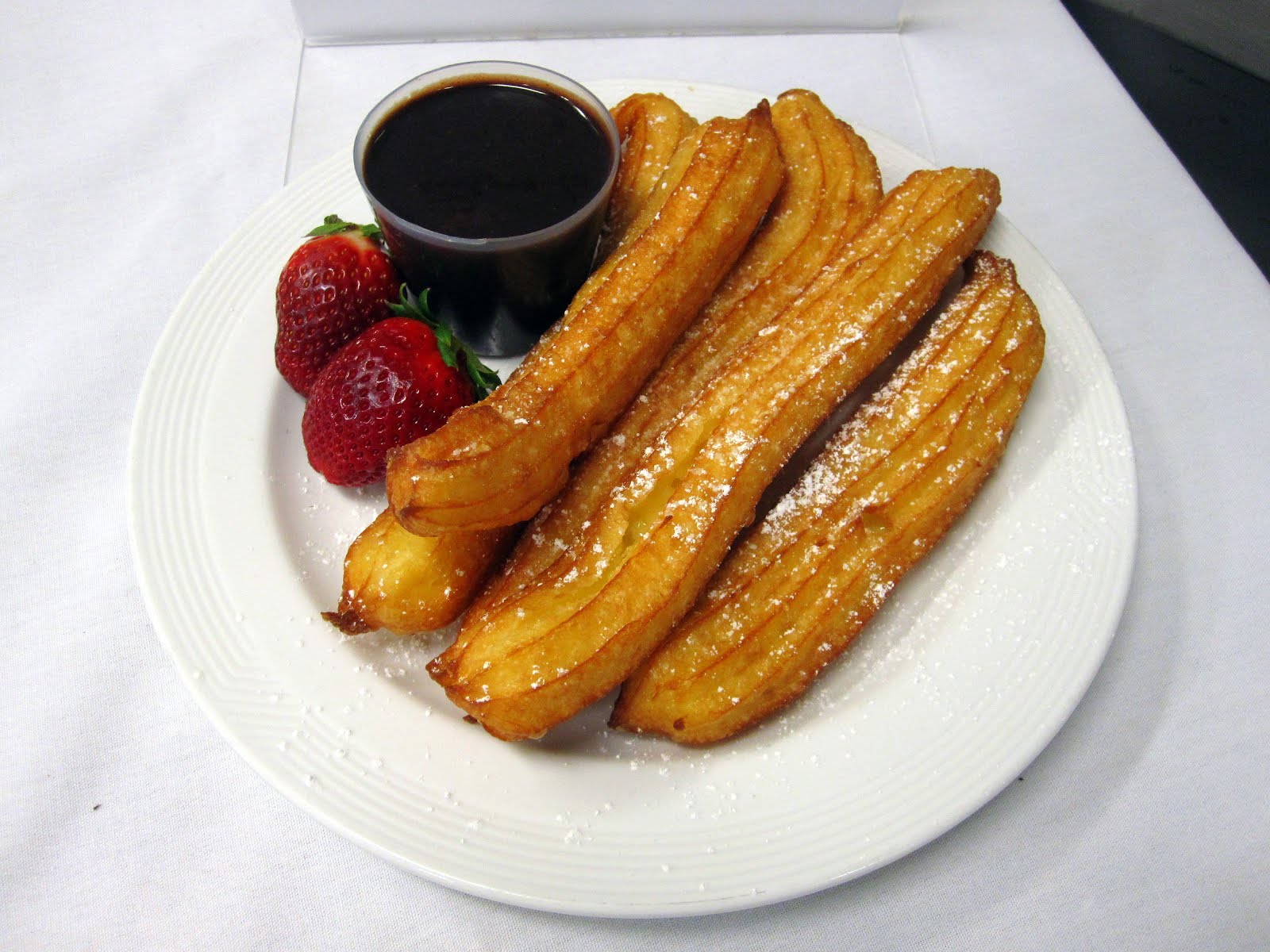
Chocolate Tart with Lavender Cream and Churros con Chocolate


Chocolate Tart with Lavender Cream

We're on our 10th lesson in our desserts unit/module. For tonight, we made Chocolate Tart with Lavender Cream and Churros con Chocolate.

I won't be describing these desserts too much and I'll let the pictures speak for themselves. 😉

The Chocolate Tart with Lavender Cream has three elements: the shell/crust/base, the ganache, and the lavender–flavoured cream. A ganache is a sweet creamy chocolate mixture used especially as a filling or frosting. Below is the recipe that we followed. I just noticed though that I had excess pastry trimmings while I was lining my pie tin, so you might want to reduce the pastry dough recipe a little bit. Also, there were no lavender flowers available to decorate my tart, so I just made chocolate filigrees and used them instead.

🍫 Chocolate Tart with Lavender Cream 🍓

(Makes 1 pie [diameter (⌀) ≈ 23 cm (9″)])

For the pastry shell/crust/base:
240 g flour (plain)
160 g butter
10 mL (1 – 2 tsp) water
pinch of salt

– Preheat the oven to 180°C.
– Place the flour, butter, and a pinch of salt in a bowl and rub in until the mixture resembles fine breadcrumbs. Add 1 – 2 teaspoons cold water and mix in until the dough just comes together. Tip out onto a lightly floured board or clean bench and form dough into a disc. Enclose in cling film and refrigerate for 30 – 60 minutes.
– Roll pastry out to about 3 – 5 mm thick and then line a pie dish or pie tin with this pastry. Prick the base with a fork, then place back in the refrigerator to rest for about 20 minutes.
– Blind–baking step: Line the pastry case with baking paper and pastry beads or uncooked rice/beans. Blind–bake for about 7 – 10 minutes, then remove baking paper and beads/rice/beans and bake for another 5 – 10 minutes or until just golden in colour.
– Press down any bubbles that have risen up and allow to cool.

For the ganache:
150 mL cream
40 g butter
250 g dark chocolate

– Place the cream and butter in a pan and stir over medium heat until butter has melted.
– Place chocolate in a heatproof bowl, pour over the warm cream–butter mixture, then stir until the chocolate has melted.

For the lavender cream:
300 mL cream
15 g sugar (castor)
1 mL lavender essence

– Whip cream with sugar until soft peaks and then stir through lavender essence.
– Cover with cling film and refrigerate until needed.

Assembly:
– Pour the chocolate ganache into the tart shell. Spread evenly with the back of a spoon or a palette knife.
– Top tarts with lavender cream and decorate with strawberries. Decorate tarts with extra lavender flowers.


My benchtop while preparing the chocolate tart 😊


A churro is a Spanish and Mexican pastry resembling a doughnut or cruller (a sweet food made from a piece of dough that has been twisted and fried) and made from deep–fried unsweetened dough and sprinkled with sugar (Merriam–Webster). The dough used in churro is pâte à choux or choux pastry.


Churros con Chocolate

Here's how we made them tonight:

🍫 Churros con Chocolate 🍓

For the pâte à choux:
250 mL water
100 g butter
150 g flour (plain)
pinch of salt
3 eggs
vegetable oil (for deep–frying)

– Preheat deep–fryer to 180°C.
– Combine water and butter in a saucepan and bring to the boil over high heat. Cook, stirring, for 3 – 4 minutes or until butter melts. Remove from heat.
– Add the flour and salt and stir with a wooden spoon until well–combined and the dough comes away from the sides of the saucepan. Cover with plastic wrap and set aside for 15 minutes or until cool.
– Add the eggs one at a time, beating well after each addition, until well–combined. Spoon dough into a piping bag fitted with a fluted/star nozzle.
– Deep–fry at 180°C for 1 – 2 minutes or until golden brown. Use a slotted spoon or a spider to transfer churros to a plate lined with paper towel. Repeat with the remaining dough.

For the chocolate dipping sauce:
200 g dark chocolate (coarsely chopped)
250 mL cream

– Combine the chocolate and cream in a saucepan over medium heat. Cook, stirring, for 5 minutes or until chocolate melts and the mixture is smooth.

Serving:
icing sugar (sifted) or cinnamon sugar powder mixture

– Dust churros with icing sugar or cinnamon sugar powder mixture.
– Arrange churros on a platter and serve with chocolate dipping sauce.


My benchtop while preparing the churros 😊


...Now tell me, who needs romance when you can have these desserts? 😉

Thursday, 20 October 2016

International Chefs Day 2016 / Crisp–skinned Barramundi on Saffron Risotto with Asparagus and Lemon and Capers Butter

😊 Today (20 October) is International Chefs Day! This special day for all chefs worldwide has been started by the World Association for Chefs Societies. More information about this event can be found on their website.

So, to all of our great cooks and chefs out there, we salute you on this special occasion! Happy International Chefs Day!


I just got home after our biweekly restaurant service training at Pavilion Restaurant tonight. We had about 20 people booked and I was assigned to cook one of the main courses: Crisp–skinned Barramundi on Saffron Risotto with Asparagus and Lemon and Capers Butter. It was my first time to prepare it, since we recently changed to a new menu for this school term (October – November). Some of the elements of this dish has already been precooked by one of the previous student teams, so that was less work for me.

Barramundi is a type of fish which is popular here in Australia. In fact, the name of this fish was borrowed from an Aboriginal word which means "fish with big scales". To know more about this fish, you may visit these pages:

          Australian Barramundi Farmers Association:
          → http://www.abfa.org.au/barramundi_name.html
          
          Australia's Sustainable Seafood Guide
          → http://www.sustainableseafood.org.au/fish.php/1/16/barramundi
          
          FishBase – the world's most comprehensive electronic encyclopedia on fish
          → http://fishbase.org/summary/346
          
          Government of Western Australia – Department of Fisheries:
→ http://www.fish.wa.gov.au/Documents/recreational_fishing/fact_sheets/fact_sheet_barramundi.pdf

          → http://www.fish.wa.gov.au/species/barramundi/Pages/default.aspx


(top) Postage stamp picture source: http://australianstrampcatalogue.com/images/1754-1-1.jpeg
(bottom) Barramundi illustration source: http://fishbase.org/images/species/Lacal_u1.gif


Here's the recipe for this delicious fish dish:

🐟 Crisp–skinned Barramundi on Saffron Risotto with Asparagus and Lemon and Capers Butter 🍋

(Makes 10 portions)

For the barramundi:
2 kg barramundi fillet (skin on)
≈ 100 mL olive oil
≈ 80 g butter
salt and pepper

– Portion barramundi into about 150 g portions with the skin on. Season with a little bit of salt and pepper.
– Put some olive oil into frying pan. When hot, add some butter and then place the barramundi skin side down. Cook until the skin is crisp.
– Turn over fish and cook until fish meat becomes opaque.
– Rest well before plating/serving.

* The fish can also be cooked in a preheated 180°C oven, but the skin should be seared on a pan first.

For the saffron risotto:
≈ 30 mL olive oil
≈ 120 g onion (finely chopped)
≈ 400 g Arborio rice
≈ 50 mL white wine
10 pieces saffron strands
≈ 1.1 L chicken stock
≈ 40 g butter
≈ 50 g Parmesan cheese (grated)

– Heat up the olive oil, sauté finely chopped onion, and add the rice. Sauté until rice becomes translucent.
– Add the white wine and saffron. Let the wine evaporate.
– Add a bit of chicken stock at a time and stir. Cook risotto until all of the stock is used and until it becomes al dente.
– Finish with butter and Parmesan cheese.

For the lemon and capers butter sauce:
5 pieces lemons
≈ 200 g capers (remove them from the brine solution)
≈ 100 g butter

– Segment lemons and extract juice from the trimmings. Combine them together and reserve for later use.
– Heat butter and toss capers, lemon segments, and juice together. Cook until butter becomes golden brown.

For the asparagus (≈ 3 spears per plate):
– Blanch the asparagus in boiling water then refresh in cold water.
– When serving, heat in butter on a frying pan.

To serve:
– Arrange on a plate with risotto, fish, asparagus, and topped with the lemon and capers butter sauce.

At Pavilion tonight, we served it up like this:


😊 Bon appétit! 🍽

Wednesday, 19 October 2016

Prelude


🥄 G'day guys! Salut tout le monde! 🌞

Bienvenue! Welcome to my blog—my first ever blog after a lot of months and weeks of contemplation and hesitation. I first thought of having my own blog early this year (2016); those moments when I've been thinking of switching careers and I thought a blog would help me document my parcours culinaire and share it to my family, friends, and to all my other friends–to–be (whether virtual/online or in real) who actually care. I've been always a timid person—and I still am today—and I reckon I'm better at writing than speaking. So I believe a blog would be a good medium and a handy journal to express myself.

Why such blog title? You may have guessed it: my blog would dwell mostly about food. Some of you would probably think that this would be just one of those for–all–I–care seemingly pretentious foodie blogs again. Each one is entitled to his/her own opinion and I greatly respect those. But for me, my blog would just be my own personal outlet to write down my own anecdotes, thoughts, and experiences. Who knows if I ran out of brain cells to store enough memories or even become forgetful later on because of my old age? hehe... Simply put, this blog would be my own personal journal—love it or hate it.

What's the thing about "closet" in my blog title? I've always like food—who doesn't? I enjoy watching cooking shows both online and on TV, though I'm not really keen on those competitive reality TV shows which sprouted up like champignons in recent years. Apart from animé and other cartoons during my primary school age period, I also grew up watching Wok with Yan, those Del Monte Kitchenomics segments at Eat Bulaga!, and Heny Sison on TV, among many others—and bien sûr, not to forget the "cooking shows/demonstrations" of my very own mother and grandmother in our homely "TV studio" (i.e. scullery and home kitchen) 😁. I still fondly remember collecting recipes ✂️ from labels of tinned Del Monte products 🍍, from various newspaper and magazine clippings 📰, and from free recipe cards (given away by supermarkets) for my mama. I've also come to admire several celebrated chefs and culinary personalities such as Stephen Yan, Doreen Fernández, Sandy Daza, Heny Sison, Rika Yukimasa, Harold McGee, Julia Child, Jamie Oliver, Heston Blumenthal, Rachel Khoo, and Georges Auguste Escoffier throughout the times that have passed 👨‍👩‍🍳. Even then, I still highly esteem our unsung culinary heroes: such as our hardworking agricultural and livestock farmers (my late grandfather is a proud rice farmer), fisherfolk, cheesemongers, and other market vendors who diligently produce, rear, harvest, catch, and sell the food and ingredients for our nourishment and pleasure—as part of my upbringing, I've been my mother's aide whenever we go to the palengke (farmers' or "wet" market) every weekend; the cook who prepared my comforting hot bowl of savoury goto ("rice porridge") sprinkled with saffron–like kasubha and chopped scallions at the now defunct Goto Park in Marikina; the humble street peddler in our neighbourhood back home who entertainingly whips out a glassful of taho ("sweet soybean curd") topped with tapioca pearls and a generous swirl of panutsa syrup in seconds; and the panaderos (bakers) who painstakingly but lovingly kneads dough at the wee hours of the morning just to create those hot and soft pan de sal bread rolls that you spread with either mantequilla, Star margarine, coconut jam, Cheez Whiz, or Reno liver pâté. In short, I've grown up learning and loving the pleasures of even the simplest of foods from the home kitchen, to the streets, and to the numerous eateries, bistros, and restaurants back in my homeland and in the many places abroad where I've set my foot onto. 🍽 However, I only keep these thoughts and feelings for myself, perhaps out of my social awkwardness, timidity, and/or my tendencies to be taciturn (in addition to my conflicting idiosyncratic frugality), unless I'm asked—excuses, excuses, excuses, hehehe... Errr, did I even answer the question thrown at me at the beginning of this paragraph? 🤔

If I had to choose who my greatest inspiration is for all of my interests about food and cuisine, one would be my grandmother (from my mother's side). But my foremost inspiration is my very own mama.

I pause here meanwhile before even my first blog entry becomes too lengthy for a prelude. Certainly, I look forward for the brighter side of things. 🌈 The Philippines may be my original hearth, but I've now embraced the Land Down Unda 🐨 as my new home—at least for now.

À plus and stay tuned!

😊